
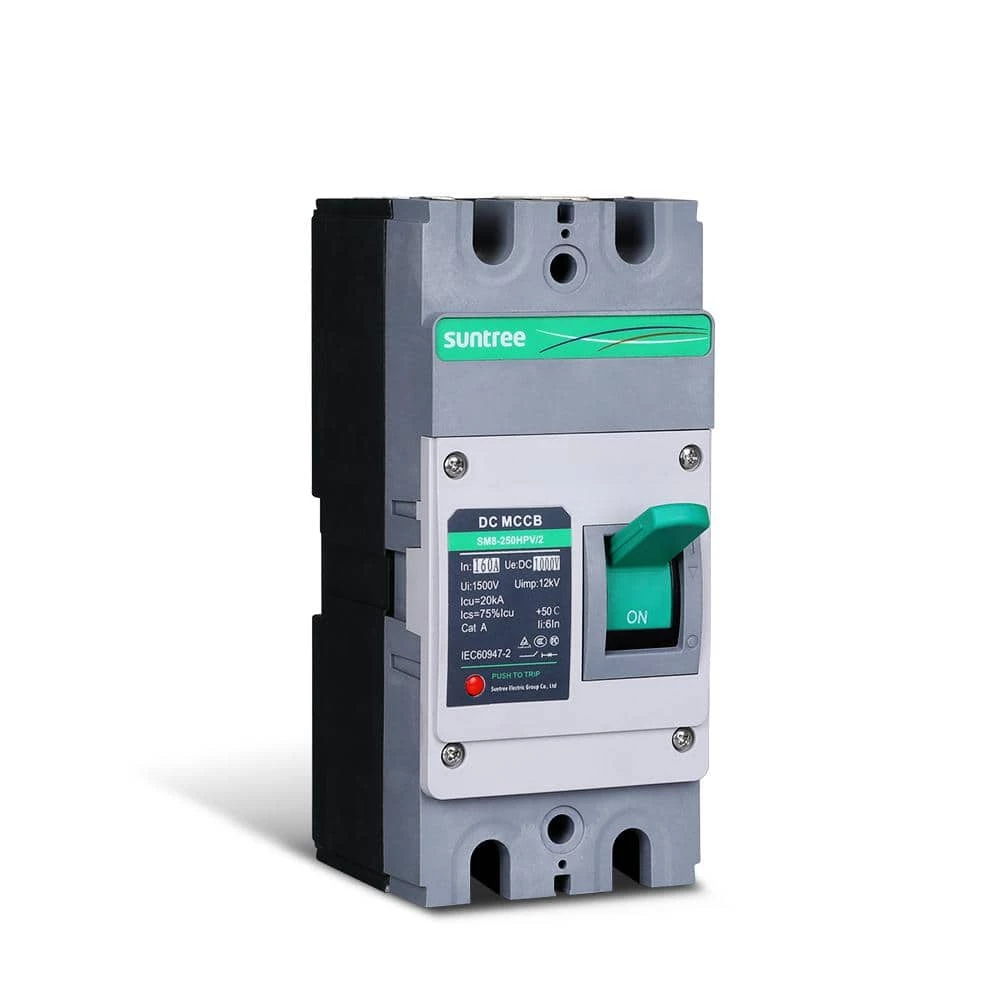

160A 2P DC Molded Case Circuit Breaker by Renogy
Original price was: $140.60.$95.99Current price is: $95.99.
- SSL encryption, absolutely safe shopping
- Shop with Confidence, Pay Safely
- Buy with Confidence, Get Quality
- Shop with ease, buy with confidence.

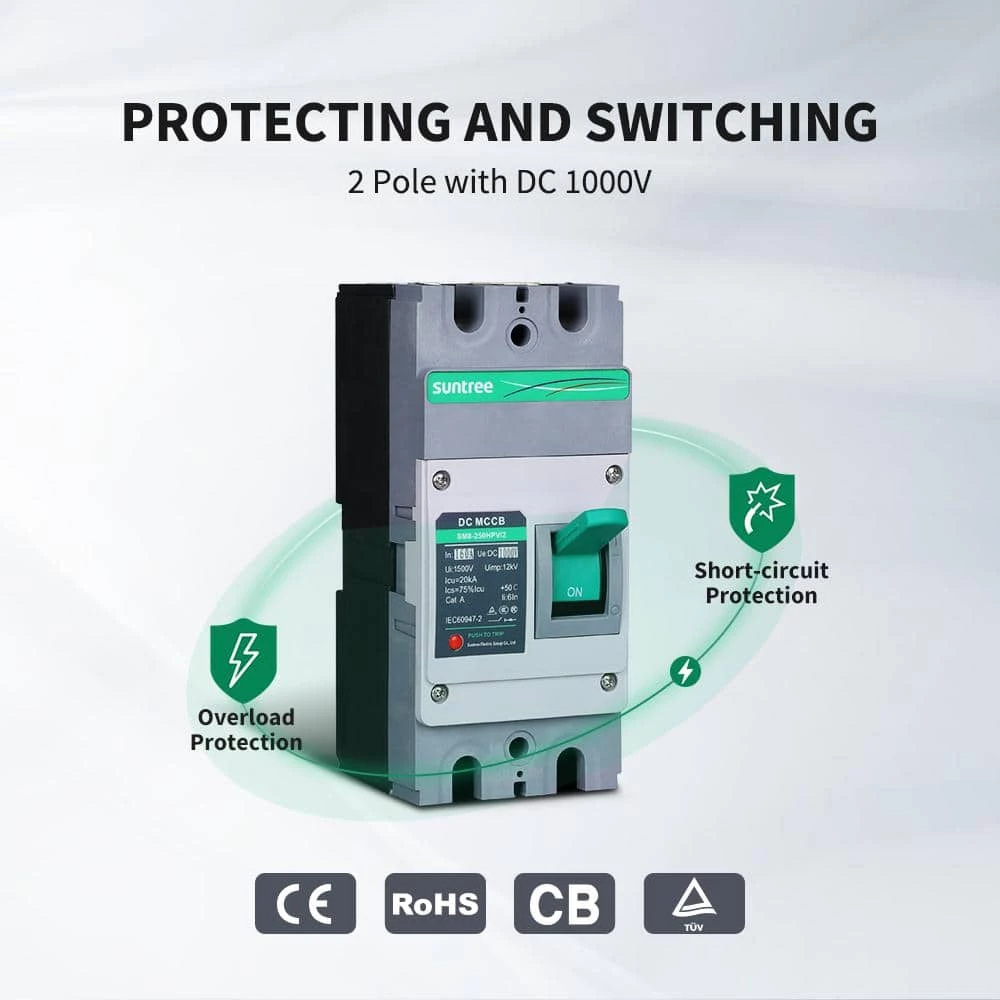
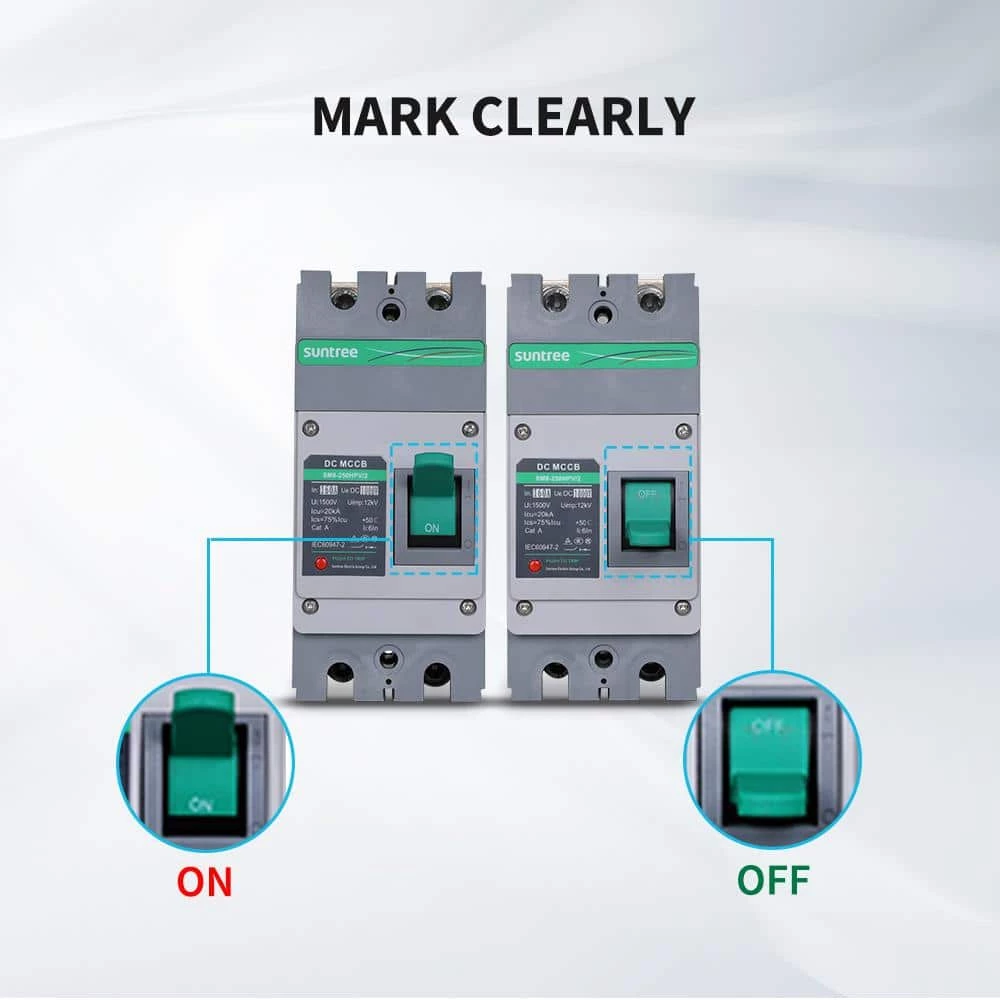
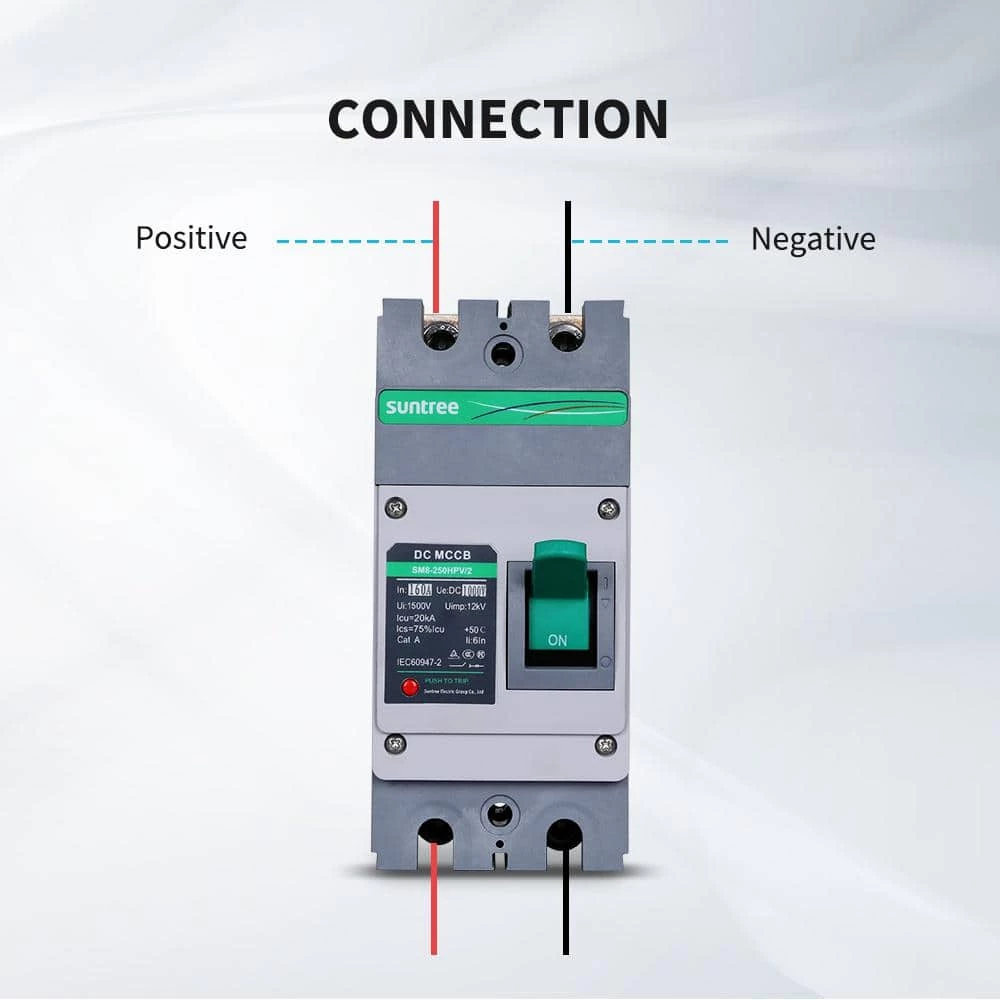
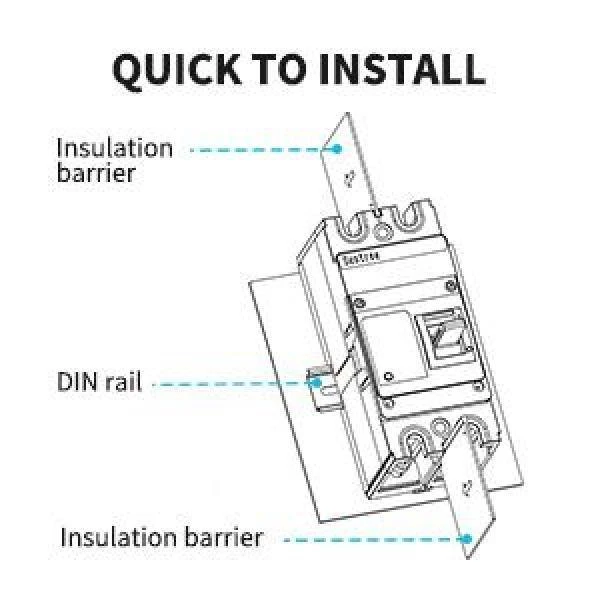
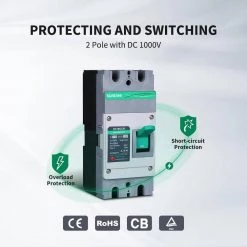
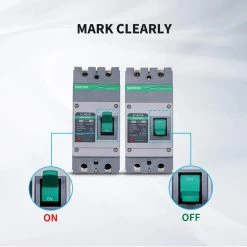
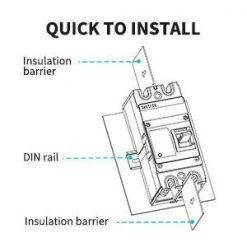
The Suntree DC Molded Case Circuit Breaker is designed to protect DC electrical installations against overloads and short circuits with both the thermal and magnetic tripping mechanism equipped. Once a fault is detected, the circuit breaker automatically switches off the electrical circuit to prevent damage to wires and avoid the risk of fire. The circuit breaker can also be manually opened under the full rated load without any damage when electrical maintenance needs to be performed. Engineered for reversible connection, the circuit breaker is allowed to be wired in either direction and functions under bidirectional current. The markings on the handle help identify the contact position of the circuit breaker at a glance. The special design enables easy installation on both the standard DIN rail and the vertical surface.
- Double security: equipped with both the thermal and magnetic tripping mechanism for reliability and safety
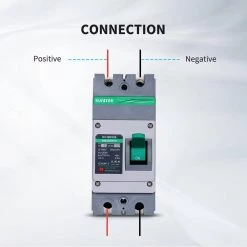
- Safe to use: offers reversible connection for worry-free wiring and bidirectional protection
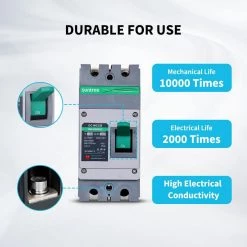
- Durable for use: after the circuit breakers is disconnected, only reset is needed and there will be no damage
- Easy to see: built-in indicator window helps identify the contact position
- Quick to install: ready for DIN rail installation and panel mounting
- Q1: how to choose a suitable circuit breaker A1: for controller/inverter/DCdevice 1. determine the maximum continuous operating current=watt/voltage 2. maximum current equal 1.25 x maximum continuous operating current 3. select the circuit breaker whose rated current is greater than and closest to the maximum current for solar panel 1. determine short-circuit current 2. maximum current equal short-circuit current x 1.25 x 1.25, 3. select the circuit breaker whose rated current is greater than and closest to the maximum current
- Q2: what size wire will it accept, A2: the circuit breaker accepts a wire of 4 AWG~4/0 AWG
- Q3: what is the difference between 1P and 2P circuit breakers, A3: 1P connects on positive only, 2P connects on positive and negative, so it can cut them both at the same time, normally, 2P can afford a greater rated current and working voltage than 1P
- Q4: what is the difference between fuse and circuit breaker, A4: circut breaker: functions: overload/short circuit protection and active disconnection can be realized, breaking time: small current delay trip, large current instant trip, rated operating voltage: 250-Volt/1000-Volt, replacement: after disconnecting, only reset is required, don’t need to replace it, fuse: function: overload/short circuit protection only, breaking time: high current also has delay, rated operating voltage: 72-Volt, replacement: replacement is required immediately after breaking
- Q5: where is the circuit breaker often connected, A5: combinar box, breaker box, home kits, etc.
- Certifications: CE, RoHS, CB, TUV
| Accessory Type | Hardware |
|---|---|
| Product Weight (lb.) | 4.67 lb |
| Returnable | 90-Day |
| Manufacturer Warranty | 1.5 Years Material and workmanship warranty |
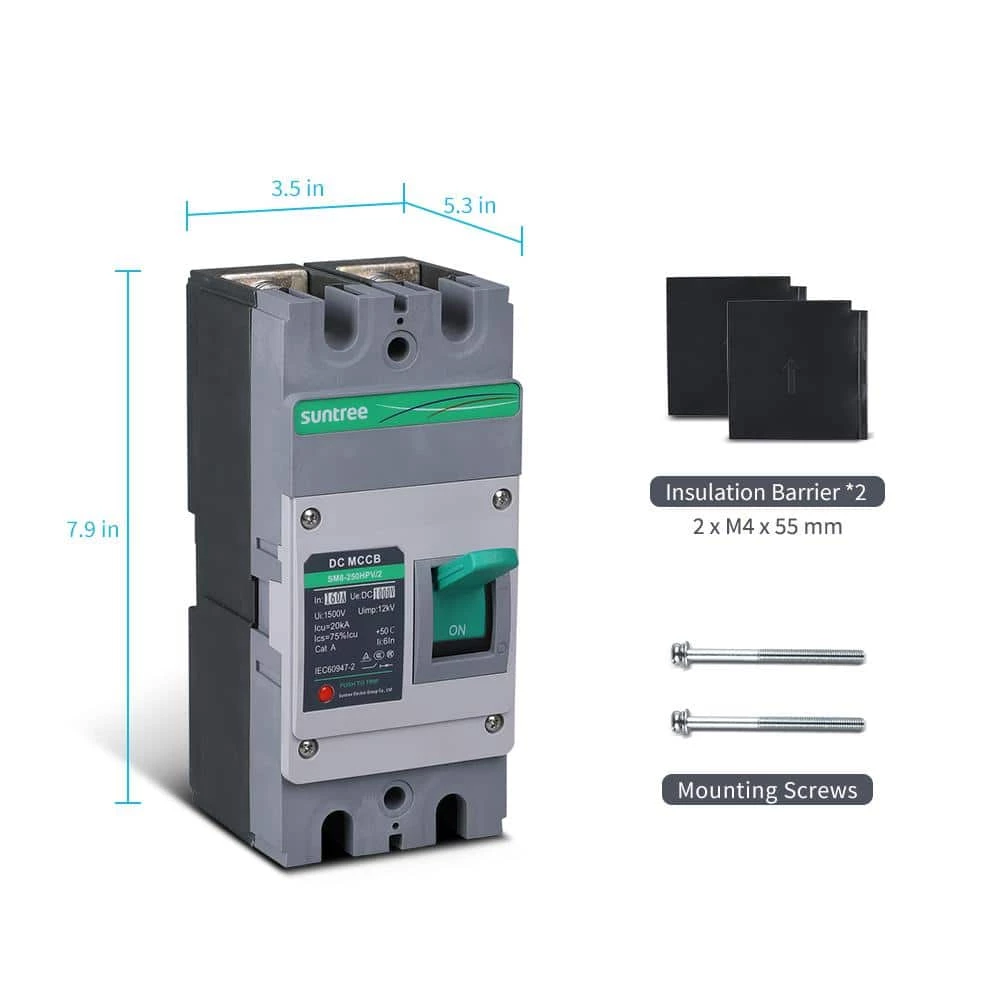
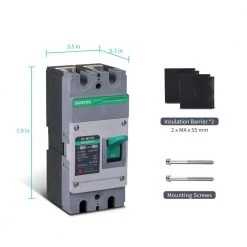
| Product Depth (in.) | 7.9 in |
| Product Height (in.) | 5.3 in |
| Product Width (in.) | 3.5 in |
Be the first to review “160A 2P DC Molded Case Circuit Breaker by Renogy”
Related products


Smart Lighting



Reviews
There are no reviews yet.